
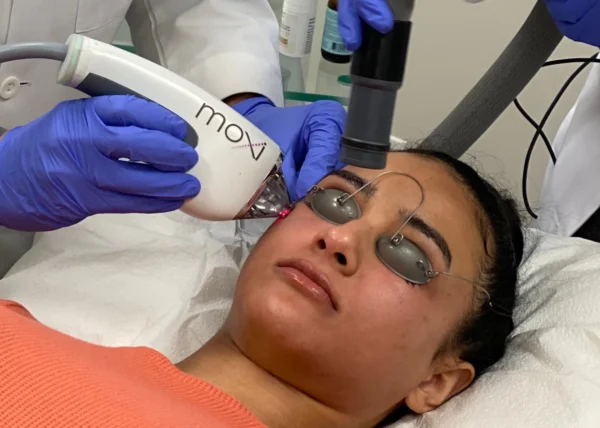
Do you want smoother, brighter, and more even-looking skin? Moxi laser may be an option worth exploring. It is a gentle laser treatment that helps improve early signs of sun damage, uneven skin tone, and rough skin texture.
Moxi is a non-ablative fractional laser. It uses controlled laser energy to support the skin’s natural renewal process without removing the entire outer layer of skin. This makes it a popular choice for people who want skin rejuvenation with limited downtime.
At Strella Medical Aesthetics, Moxi laser treatment is available for patients who want to improve their skin’s tone, texture, and overall appearance. If you are considering a Moxi facial, this guide explains how it works, what happens during treatment, and what to expect during recovery.
What Is Moxi Laser Treatment?
Moxi is a non-ablative fractional laser made by Sciton. It uses a 1927 nm wavelength to deliver controlled laser energy into the skin.
The laser creates tiny treatment zones that support the skin’s natural repair process. As your skin heals, it can look smoother, brighter, and more even.
Unlike ablative laser treatments, Moxi does not remove the full outer layer of skin. It is designed to address early skin changes with less downtime than more aggressive resurfacing treatments.
Moxi is often used by people who want to:
Improve uneven skin tone.
Reduce the appearance of early sun damage.
Improve rough skin texture.
Refresh dull-looking skin.
Address mild signs of aging.
Maintain healthy-looking skin.
Moxi can treat the face and other areas of the body, including the neck, chest, and hands. Your provider will help decide which areas are suitable for treatment.
What Does Moxi Laser Treat?
Moxi laser focuses on early signs of skin damage and aging. It can help improve several common skin concerns.
1. Uneven Skin Tone
Uneven skin tone can develop due to sun exposure, aging, and changes in skin pigmentation. Moxi helps improve the appearance of certain types of uneven tone by supporting skin renewal.
2. Sun Damage and Dark Spots
Spending time in the sun can lead to visible spots and uneven pigmentation. Moxi can help improve the appearance of some superficial sun damage and age spots.
Not every dark spot is caused by sun damage. A skin assessment is important before choosing a treatment.
3. Rough Skin Texture
Rough or uneven skin can make your complexion look dull. Moxi supports the natural renewal of skin cells and may help create a smoother-looking surface.
4. Fine Lines and Early Signs of Aging
As skin ages, fine lines and texture changes may become more visible. Moxi can help improve the appearance of some early skin changes.
It is not a replacement for treatments designed to address deep wrinkles or significant skin sagging.
5. Dull-Looking Skin
Dead skin cells and sun damage can affect the way your skin looks. Moxi supports skin renewal and can help improve the appearance of dull skin.
What Are the Benefits of Moxi Laser?
Moxi is designed for people who want to refresh their skin without choosing a more aggressive laser treatment.
Some of its key benefits include:
Improves skin tone: Helps reduce the appearance of uneven tone and superficial pigmentation.
Supports smoother texture: Helps improve rough or uneven skin.
Addresses early sun damage: Targets some visible signs of sun exposure.
Supports skin renewal: Uses controlled laser energy to activate the skin’s natural repair process.
Offers limited downtime: Recovery is generally shorter than with more aggressive resurfacing treatments.
Treats different areas: It can be used on the face, neck, chest, and hands when appropriate.
Results depend on your skin condition, treatment settings, and number of sessions.
What to Expect Before a Moxi Laser Treatment
Before your Moxi treatment, your provider will examine your skin and discuss your goals.
This helps determine whether Moxi is right for you and which treatment settings are suitable.
You may receive instructions such as:
Avoid tanning and excessive sun exposure before treatment.
Do not arrive with sunburned or irritated skin.
Tell your provider about your medications and skincare products.
Ask whether you should stop using retinoids or exfoliating acids for a short time.
Follow the clinic’s instructions about cleansing your skin before the appointment.
Your provider may also take photos to record your skin’s condition before treatment.
Following these steps can help prepare your skin and support a safe treatment plan.
What Happens During a Moxi Facial?
A Moxi appointment starts with skin preparation. Your provider cleans the treatment area and may apply a numbing cream based on your treatment plan.
Next, the provider moves the Moxi handpiece across your skin. The device delivers controlled laser energy to the treatment area.
During the procedure, you may notice:
A warm feeling on your skin.
Mild prickling or heat.
Some temporary redness after treatment.
The exact treatment time depends on the area being treated and the treatment settings. Strella lists an estimated appointment time of 30 to 45 minutes for its Moxi treatment.
Your provider will explain each step and help keep you comfortable during the procedure.
Moxi Laser Before and After: What Results Can You Expect?
Moxi laser results develop as your skin heals and renews itself.
After treatment, you may notice that your skin looks brighter and feels smoother. Changes in skin tone and texture may become more visible over the following weeks.
Your results depend on:
Your skin’s starting condition.
The treatment settings used.
The number of sessions.
Your skin’s natural healing process.
Your skincare and sun protection habits.
Moxi Before and After One Treatment
Some patients notice a fresher-looking complexion after one Moxi session. Skin may look brighter, and some areas of uneven tone may improve.
However, one session may not provide the level of correction you want. More than one treatment may be recommended based on your skin concerns.
Moxi Before and After Three Treatments
A series of treatments may provide more noticeable changes in skin tone and texture.
Three sessions are often used as a starting treatment plan, but the right number depends on your needs. Your provider can recommend a schedule and explain what results are realistic.
Image recommendation: Add genuine patient before-and-after photographs here if Strella has them and has permission to publish them. Include the number of treatments and the time between photos when verified.
Moxi Laser Recovery: What Happens Day by Day?
Moxi is known for having limited downtime compared with more aggressive laser treatments. However, your skin still needs time to heal.
Here is a general guide to the Moxi recovery process.
First 24 Hours
Your skin may look red or feel warm, similar to a mild sunburn. Some patients also notice mild swelling or sensitivity.
Use gentle skincare and follow your provider’s instructions.
Days 2–3: MENDs May Appear
You may notice tiny dark spots across the treated area. These spots are called MENDs, which stands for microscopic epidermal necrotic debris.
They are part of the skin’s natural healing process. The treated areas may feel dry or rough, similar to fine sandpaper.
Do not pick or scrub these spots.
Days 3–5: Skin Begins to Renew
The small dark spots may start to flake away as your skin heals. Avoid pulling or removing them yourself.
Keep your skin clean and moisturized.
Days 5–7: Skin Looks Smoother
Many patients notice that the rough texture begins to settle during this period. Their skin may look brighter and feel smoother.
Healing times vary. Some patients may need more time, depending on treatment intensity and their skin’s response.
Moxi Laser Aftercare: How to Care for Your Skin
Good aftercare helps protect your skin during recovery.
Follow the instructions given by your provider. General aftercare tips may include:
Wash your face with a gentle cleanser.
Use a simple moisturizer.
Apply broad-spectrum SPF 30 or higher.
Avoid direct sun exposure.
Do not pick, scratch, or scrub the treated skin.
Avoid exfoliating acids and retinoids until your provider says they are safe to use again.
Avoid excessive heat or strenuous exercise if advised by your provider.
Your skin may be more sensitive after treatment. Keep your skincare routine simple until the healing process is complete.
How Many Moxi Laser Treatments Do You Need?
The number of Moxi treatments depends on your skin condition and treatment goals.
Some people notice changes after one session. Others may need a series of treatments to improve the appearance of sun damage, uneven tone, or rough texture.
Strella commonly recommends three sessions spaced four to six weeks apart, followed by maintenance when needed.
Your provider may suggest a different schedule based on your skin and the level of correction you want.
Does Moxi Laser Hurt?
Most patients find Moxi manageable. During treatment, you may feel warmth, mild prickling, or a light snapping sensation.
A topical numbing cream may be used depending on the treatment settings and your comfort needs.
You may also notice temporary redness, warmth, or sensitivity after the procedure. Tell your provider if you feel uncomfortable during treatment.
Moxi Laser vs. Other Skin Treatments
Different skin treatments address different concerns. The best option depends on your skin, goals, and preferred recovery time.
Moxi vs. BBL HEROic
Moxi and BBL HEROic use different types of light technology.
Moxi is a fractional laser that helps improve skin tone, texture, and early signs of sun damage.
BBL HEROic uses broadband light to target concerns such as visible sun damage, redness, and uneven pigmentation.
Some patients may benefit from both treatments. Your provider can decide whether a combined plan is suitable.
Moxi vs. CO2 Laser
Moxi is a non-ablative fractional laser. It delivers energy without removing the full outer layer of skin.
CO2 laser resurfacing is an ablative treatment. It removes controlled layers of skin and is often used for more advanced texture concerns, deeper wrinkles, and certain scars.
CO2 treatments usually involve more downtime and a longer healing process than Moxi.
Moxi vs. Erbium Laser
Moxi and erbium lasers are not the same treatment.
Moxi uses non-ablative fractional 1927 nm laser energy. Erbium resurfacing lasers, such as Er:YAG, can remove controlled layers of skin.
The treatment choice depends on the skin concern, desired level of correction, and recovery time you can manage.
Your provider can explain which option is more suitable for your skin.
Can Moxi Laser Be Used Under the Eyes?
The skin around the eyes is thin and delicate. Some laser treatments may be used in selected areas around the eyes, but treatment must be planned with care.
Whether Moxi is suitable for your under-eye area depends on your skin, eye health, and treatment goals.
A qualified provider should assess the area and explain the possible benefits and risks before treatment. Do not assume that every Moxi treatment setting is suitable for the eyelids or under-eye skin.
Who Is a Good Candidate for Moxi Laser?
Moxi may suit adults who want to improve the appearance of early sun damage, uneven skin tone, mild pigmentation, or rough texture.
It may also be an option for people who want to maintain their skin and address early signs of aging.
However, Moxi is not right for everyone.
Your provider should review your skin, medical history, medications, recent sun exposure, and past skin treatments before recommending the procedure.
Tell your provider if you have an active skin infection, open wound, recent tan, or a history of unusual skin reactions.
Moxi Laser Treatment at Strella Medical Aesthetics
Strella Medical Aesthetics offers MOXI laser treatment for patients who want to improve the appearance of uneven skin tone, early sun damage, and rough skin texture.
Under the medical direction of Dr. Benjamin Lam, D.O., F.A.C.O.S., F.A.C.S., the team provides personalized treatment planning based on each patient’s skin concerns and goals.
Strella has locations in Lower Gwynedd and Trooper, Pennsylvania, serving patients from nearby Montgomery County communities.
Patients can explore MOXI laser treatment at Strella Medical Aesthetics to learn more about the procedure, treatment areas, and consultation options.
Frequently Asked Questions About Moxi Laser
1. What Is Moxi Laser Used For?
Moxi is used to improve the appearance of early sun damage, uneven skin tone, superficial pigmentation, and rough skin texture. It is a non-ablative fractional laser that supports the skin’s natural renewal process.
2. How Long Does Moxi Laser Downtime Last?
Many patients have mild redness and rough skin for a few days after treatment. Small dark spots called MENDs may appear and begin to flake away as the skin heals. Recovery varies based on treatment settings and individual skin response.
3. What Are MENDs After Moxi Laser?
MENDs are tiny dark spots that can appear after Moxi treatment. They form as the treated skin begins to heal. They may feel rough, like fine sandpaper, before they naturally flake away. Avoid picking or scrubbing them.
4. When Will I See Moxi Laser Results?
Some patients notice brighter-looking skin within five to seven days. Skin tone and texture may continue to improve over the following weeks. Results vary based on the treatment plan and individual skin response.
5. How Many Moxi Treatments Do I Need?
The number of treatments depends on your skin concerns and goals. Strella commonly recommends three sessions spaced four to six weeks apart, followed by maintenance when needed. Your provider will help choose the right schedule.
6. Can Moxi Laser Be Used on Different Skin Tones?
Moxi is designed to treat a wide range of skin tones. However, treatment settings and suitability must be assessed for each patient. A consultation helps your provider plan treatment based on your skin type and medical history.
7. Can I Wear Makeup After Moxi Laser?
Your provider will tell you when it is safe to apply makeup. Many treatment protocols recommend waiting at least 24 hours. You may need to wait longer if your skin is still red, sensitive, or irritated.
8. Can Moxi Laser Treat the Neck and Chest?
Yes. Moxi can be used on areas such as the neck and chest, as well as the face and hands. Your provider will assess the area and decide whether treatment is suitable.
9. Can Moxi Laser Be Combined With BBL HEROic?
Moxi and BBL HEROic may be combined in a treatment plan when appropriate. They use different technologies and target different skin concerns. Your provider can assess your skin and decide whether combining them is a good option.
10. Is Moxi Laser Better Than CO2 Laser?
Neither treatment is best for everyone. Moxi is a non-ablative laser for early skin concerns and generally has less downtime. CO2 laser resurfacing is more intensive and may be used for deeper wrinkles, scars, and texture concerns. The right choice depends on your skin and goals.
Explore Moxi Laser Treatment at Strella Medical Aesthetics
If you want to improve uneven skin tone, early sun damage, or rough skin texture, Moxi may be worth discussing with a qualified provider.
At Strella Medical Aesthetics, your skin concerns and treatment goals are reviewed before a plan is recommended.
Explore Moxi laser treatment and laser treatments at Strella Medical Aesthetics to learn more.
Contact the team to schedule a consultation and find out whether Moxi is right for your skin.